
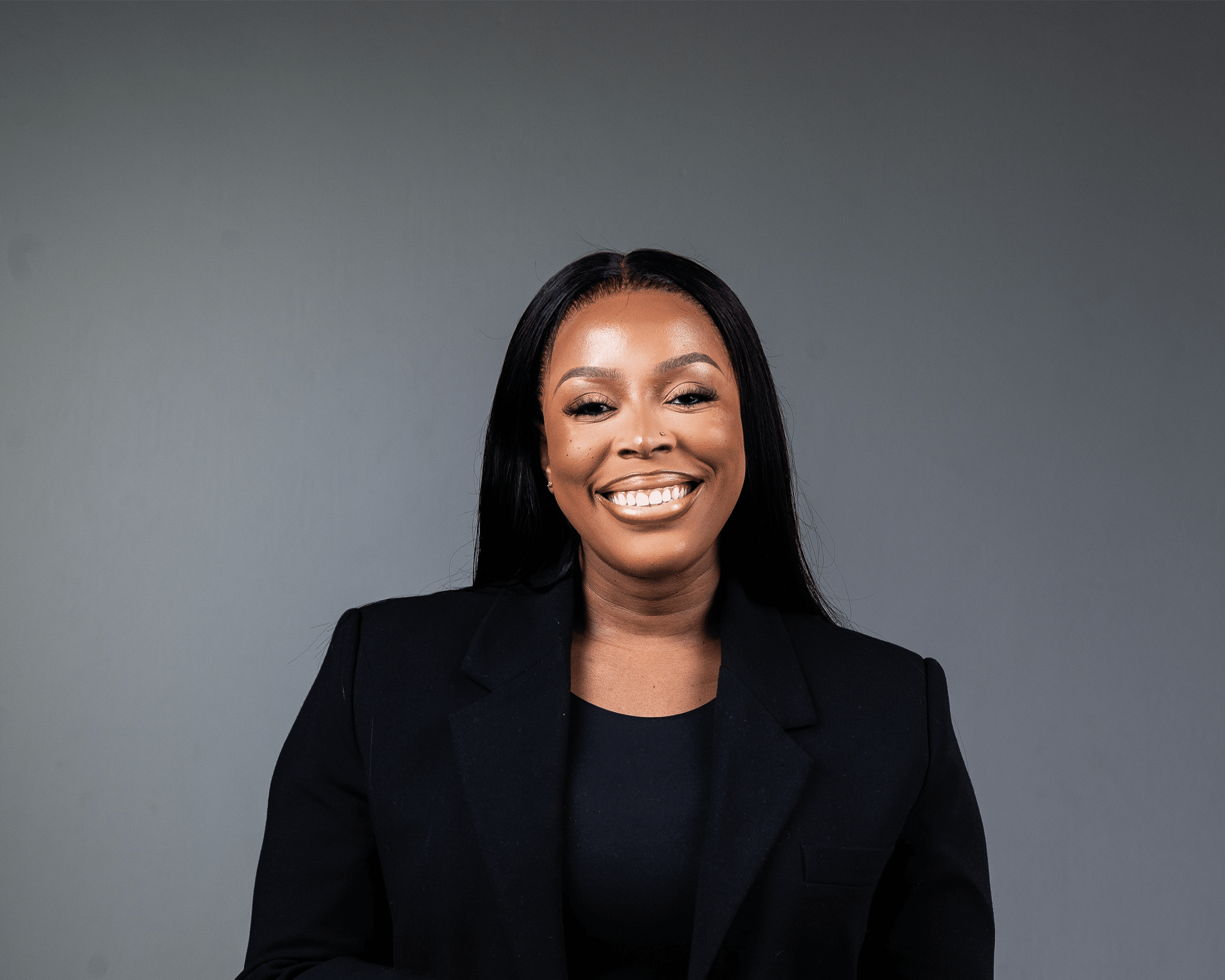
Dimpho Lekgeu is using media and communication to push for a more just and equal society.
With a background in media production and community management, Dimpho Lekgeu is a true connector of people and ideas. As communications manager at the African Climate Reality Project and a One Young World ambassador, she’s breaking down barriers and sparking meaningful conversations. Recognised as a Mail & Guardian Top 200 Young South African in 2022, Dimpho is driven by a desire to amplify marginalised voices and propel change. In this Q&A, she shares her thoughts on the power of storytelling and the importance of youth participation.
Q: What inspired you to pursue your career?
A: I wrote really well in school and I was always very well-spoken. I used to compete in speech competitions, so I’ve always been fascinated by the art of telling stories and the science of communication. At the same time, I had a deep curiosity about the world. My dad was incredibly intelligent and curious. One of his rituals on Sundays was to come back from church, sit on the floor with the Sunday newspapers spread out – the politics, the business, the sports – and I’d watch him read and engage with all of it.
Growing up, I was a child raised in the township by a working-class family, but I went to school in the suburbs at a multiracial school. That contrast made me curious about inequality and social justice. I realised that storytelling and media were powerful ways to platform people who don’t always have access to a microphone – people whose stories deserve to be seen and heard.
Q: How did you get into community work?
A: Everything really came together in the most unexpected way. I transitioned into working as community manager for a youth development organisation [Youth Lab]. At its core, that role was about building a network of young people passionate about youth participation, amplifying youth voices, especially in policy and decision-making, and finding creative ways to platform their experiences. Since then, I’ve had the privilege of using this skill for storytelling across politics, youth empowerment and now climate justice. It has been eye-opening and very fulfilling.
Q: How did it feel to be recognised as a Top 200 Young South African?
A: This was such a great honour and remains one of the highlights of my career. When you work in media and advocacy, you show up every day, but real change often takes time. Sometimes you wonder whether the work you do actually makes a difference in people’s lives or is moving us closer to a more just and equal society. So to be recognised by a publication as reputable as the Mail & Guardian, selected from thousands of candidates, was not only an honour but also deeply affirming.
Q: How did you pick up the skills for moderating discussions for prominent organisations?
A: I started my career in broadcasting. One of the most fundamental experiences that shaped me into the moderator I am today was hosting a show called ‘The News Platform’ on Tuks FM while I was at the University of Pretoria. It was a current affairs show where we discussed social issues affecting young people on campus and in Pretoria more broadly. That show taught me how to design conversations that don’t just entertain but truly unpack an issue, build toward possible solutions, and leave people feeling like there’s something they can practically do.
During Covid, I joined Youth Transforming Africa, which is an alumni network of the World Bank’s #Blog4Dev competition winners. Because we couldn’t host in-person events, we started doing online sessions. I moderated one or two, and someone from the World Bank said, “You’re really good at this. Would you like to facilitate more?” That’s how my moderating journey took off. As the world reopened, I moved from online conversations on to physical stages, using my voice to bring important and consequential discussions to life – conversations centred on building a more just and equal world, and on issues affecting youth and women on the continent. I’ve since had the privilege of working with the World Bank, the African Centre for Economic Transformation, the UN Development Programme and One Young World.
Q: You also host a podcast…
A: Yes, with Claude Grunitzky. It’s called ‘Limitless Africa’ and it’s a powerful podcast that explores what shared prosperity between Africa and the world looks like. I always say that telling African stories is the work of my life. I’m grateful that I get to play my part in changing the world through conversation.
Q: Why is it important to discuss the constitution and Apartheid’s impact on South Africa?
A: One of the first ways to promote social justice is to keep talking about it. We must keep exposing the deep-seated inequalities in our society. With the rise of social media, we often see a polished, curated version of life in this country. But the reality is stark – around 55% of South Africans live below the poverty line, homelessness is widespread and youth unemployment is at crisis levels. Right now, nearly 60% of young people are unemployed, one of the highest rates in the world, which is a massive policy failure.
So storytelling matters. Not just telling stories but telling lived experiences. One of my favourite pieces of content is Youth Capital’s film I’ve Been Trying: 8 Years Without a Job, which documents the realities of young people trying to find work. That’s the real South Africa.
The second way to promote social justice is accountability. Even with everything happening in the world, it’s important that we continue to resist, to raise our voices, and to challenge inequality and injustice. Whether we’re organising in our communities or supporting advocacy campaigns online, all of us can play a role.
Q: How do you think young people can be empowered to make a positive impact in their communities and the world at large?
A: I love this question because I don’t think young people need to be empowered to make an impact. Young people are already doing it! If you want to see what active citizenship looks like, look to South African youth. They’re entrepreneurs, educators, civic leaders, organisers. They’ve always played an active role in South Africa’s social and political transformation – from the 1976 Soweto protests to #FeesMustFall to the Purple Movement against GBV. Young people are extraordinary leaders. So the real question is: how do we support the work that is already underway? We must support them by funding their work, amplifying it and creating systems that don’t waste their potential.
Q: What motivates you to continue making a positive impact?
A: I am driven by a deep desire to help create a more just and equal society. I genuinely believe every person has the right to the best possible experience of life, to live in a country and community that cares for them, that enables them to self-actualise, that allows them to become the best version of themselves.
Q: How do you think we can create more opportunities and support systems for women and girls in leadership positions?
A: This is such an important question. We’ve made progress but there is still so much to do. First, women need to see themselves as leaders. Many of us are conditioned to be the support structure, to stay on the sidelines, but not to take the reins. Some of this is cultural, some of it is structural. Globally, women hold only about 32% of senior leadership roles, and in SA only around 26% of executives are women. That gap won’t close on its own so we have to be intentional.
Secondly, we must create work environments that actually support the realities of women’s lives, especially in a country where most households are headed by women, particularly black women. That means accessible childcare, parental leave that recognises women’s bodies and responsibilities, and workplaces that understand that women don’t show up as one-dimensional beings. They are mothers, caregivers, community builders, all while pursuing careers. Creating environments that accommodate those realities is very important if we want more women to lead.
Q: What projects or initiatives are you currently working on?
A: On ‘Limitless Africa’, we’re telling the stories of remarkable activists, entrepreneurs and creatives across the continent – expect more episodes and more powerful storytelling. I’m also working at the African Climate Reality Project, a branch of the global Climate Reality Project, and I’m excited to keep using communications to advocate for justice, inclusion and climate action. I recently joined the Social Alchemists, a speaker bureau representing some of the most talented moderators, speakers and entertainers. So there will also be more hosting and moderating of consequential conversations and using the platforms I have to spotlight more young people and more women.
Words: Emma Mbuthuma
Photography by: Gallo/Getty Images