


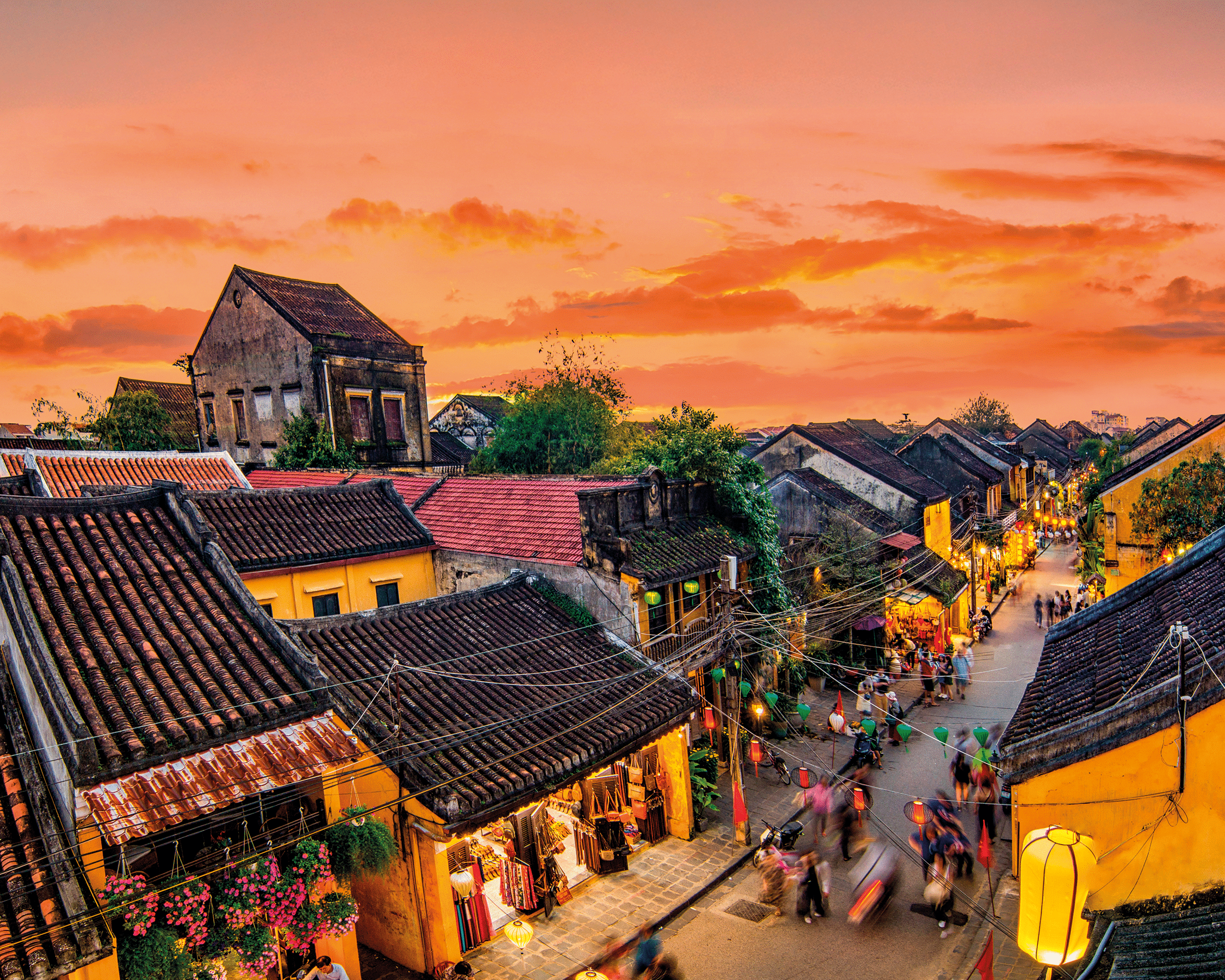
Hoi An: Vietnam’s Yellow Riverside Town
View this post on Instagram
A Unesco World Heritage site since 1999, this Vietnamese city sits on the Thu Bon River just 27 kilometres south of Da Nang. In 2025 it was rated the world’s cheapest long-haul destination in the UK Post Office’s annual Long Haul Holiday Report which determines which faraway places give travellers the best value for their money.
The real reason to visit, though, is to experience a place that is, for many, like walking through a living artwork — most of its houses, monuments, temples and old wooden shops are in gorgeous shades of mustard yellow. Depending on the light and the time of day, it glimmers and glows in various shades of gold and sunflower, deep ochre and bright saffron — hence its ‘Yellow City’ moniker.
Its yellow sheen isn’t merely for decorative effect. For Vietnamese people, yellow is symbolic of harmony, happiness and prosperity, and so its streets embody a sense of pride – a happy glow, if you will. Hoi An also transports you back in time. The city rather miraculously survived the terrible, prolonged war that shook this part of the world until 1975 and, still, its old town remains magnificently intact. And because its streets are so ancient, they’re too narrow for cars, while motorbikes are only permitted to enter during certain hours. These cobblestone roads are lined with wooden merchant houses, ornate temples and assembly halls mostly dating from the 1700s – some 844 of its almost 1000 heritage buildings are listed as historical monuments.
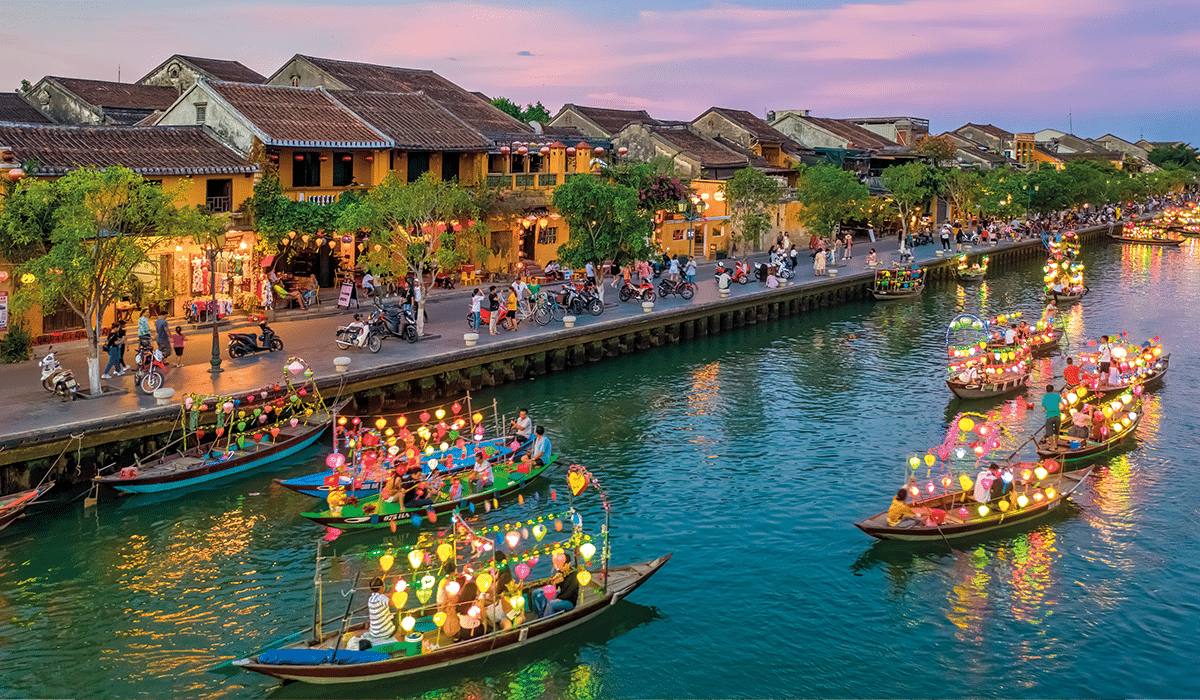
While it’s no longer a thriving commercial port town, you can watch fishermen launching their bamboo basket boats from the river’s palm-fringed beaches and there are scenes of farmers in conical hats harvesting rice from their paddies or tending their shrimp and fish ponds.
You can explore the area on foot or cycle through coconut groves, keeping watch for wallowing water buffalo and see flocks of ducks being coaxed into the canals by farmers.
A good place to savour some of the local cuisine is at the main Hoi An Market, a barn-like space where you’ll find tables groaning under the weight of papaya and dragon fruit. In the main hall, you’ll find scores of glass hutches packed with plates of orange shrimp and spring rolls. Don’t forget to pick up an iced Vietnamese coffee — and do linger long enough to see what becomes of the town’s yellow hues at sunset.
Izamál: The Yellow City Of Yucatan
@bontraveler Have you heard of Izamal? 🌼🌙🍋 one of the best destinations in Yucatán, Mexico #pueblosmagicos #izamalyucatán #izamal #mexicotravel ♬ original sound – Jessica Wright
Recognised in 2002 as one of Mexico’s ‘Pueblos Magicos’ (magical towns), Izamál is the oldest, yellowest and most magical pueblo in the Yucatan Peninsula.
It’s long been a pilgrimage site that lures religious visitors who believe the city’s saintly statues perform miracles but, for travellers, it’s not just the serenity of its streets but the glorious sensation of being in a town that’s been painted almost entirely in yellow — the effect is dazzling, like being in a movie.
Today, Izamál is a fusion of Mayan and colonial influences, and the religion practiced here is a somewhat syncretic Catholicism. While its yellow-walled Convent in the heart of the town was built in 1561 atop Mayan ruins at a time when colonial authorities tried to eradicate indigenous beliefs, most pilgrims continue to honour more ancient Mayan traditions by climbing the ruins of the 35-metre-high Kinich Kakm6 pyramid, built to the Mayan sun god. There are, in fact, some 80 pre-Hispanic archeological structures in and around Izamál, including a network of roads more than a thousand years old, hinting at the great power that the city once exerted across the region.
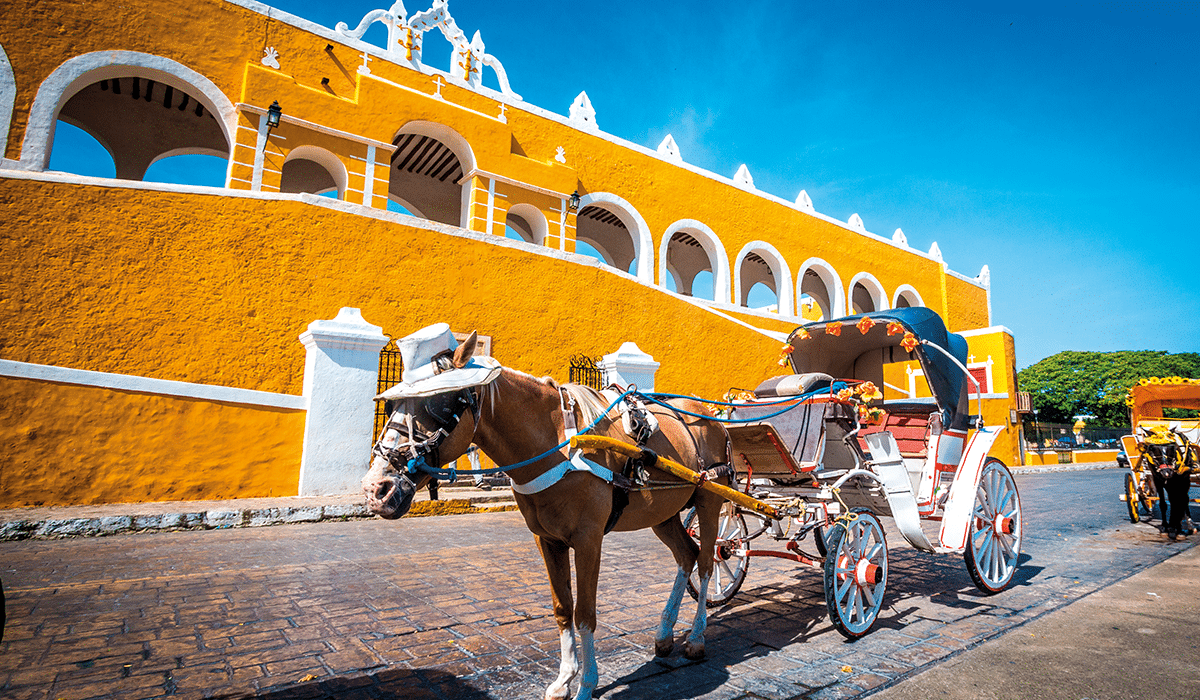
Izamál’s overwhelming yellowness is a fairly recent development, the result of Pope John Paul II’s announcement in 1993 that he was visiting the town. In preparation, officials decided to spruce the place up, painting first the Convent (also known as St Antony’s Monastery) and all the surrounding buildings bright yellow. Conveniently, many of the town’s houses were already yellow, probably due to a long-standing reverence for the sun god and in honour of the region’s staple crop, corn.
And since there is yellow on the Vatican flag, they’ve ensured that the town is dutifully respectful of Catholicism, too. It’s an off-the-beaten-track town, all of it walkable and mostly free to see — and relatively quick to explore, although worth taking time to savour. Walking the narrow cobblestone streets (or from a horse-drawn carriage), you’ll see women wearing traditional white dresses known as huipils, which are embroidered with flowers, and you’ll hear Yucatec Maya, also known as Máaya Táan, spoken on the streets — for most of the residents, it’s their first language, attesting to the preservation of an ancient heritage.
You can taste its ancient traditions, too. Yucatán cuisine combines Mayan, Spanish and Caribbean influences to produce dishes such as sopa de lima (lime soup), poc chuc (marinated grilled pork) and cochinita pibil (slow-roasted pork) — you will not go hungry.
A yellow stay in the heart of the karoo
In the Great Karoo, the pretty town of Prince Albert sparkles in a fertile, pretty valley below the majestic Swartberg mountains.
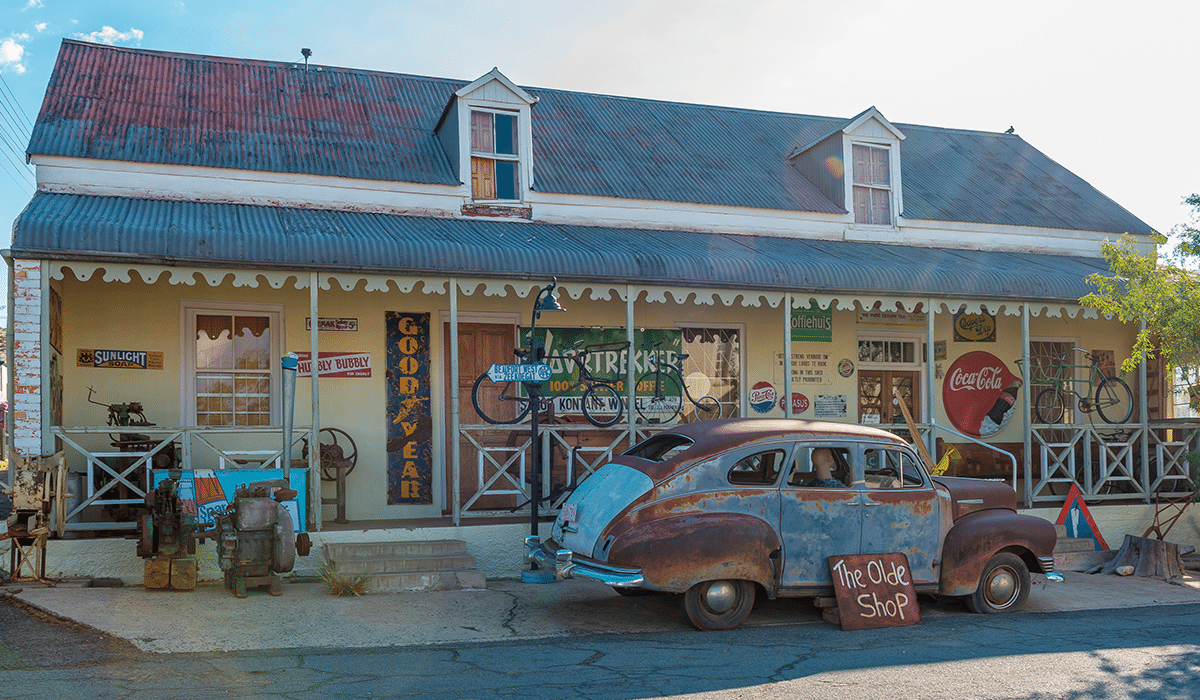
Here, The Yellow House is a working almond and citrus farm with accommodations in a handful of restored self-catering guest cottages. Owned and managed by people who absolutely love the colour yellow, it’s a special place, situated less than 2km from the centre of town. Its buildings mostly date from the late-1800s, built around the time the great engineer Thomas Bain was carving out the Swartberg Pass, which links Prince Albert with the Little Karoo. It’s a fabulous place to chill and take in the infinite pleasures of the enfolding area: breathtaking mountains, wonderful star-filled night skies and so many good places to eat, shop and explore. yellowhouse.co.za
Jaisalmer: India’s Fairytale
Castle In the Desert
View this post on Instagram
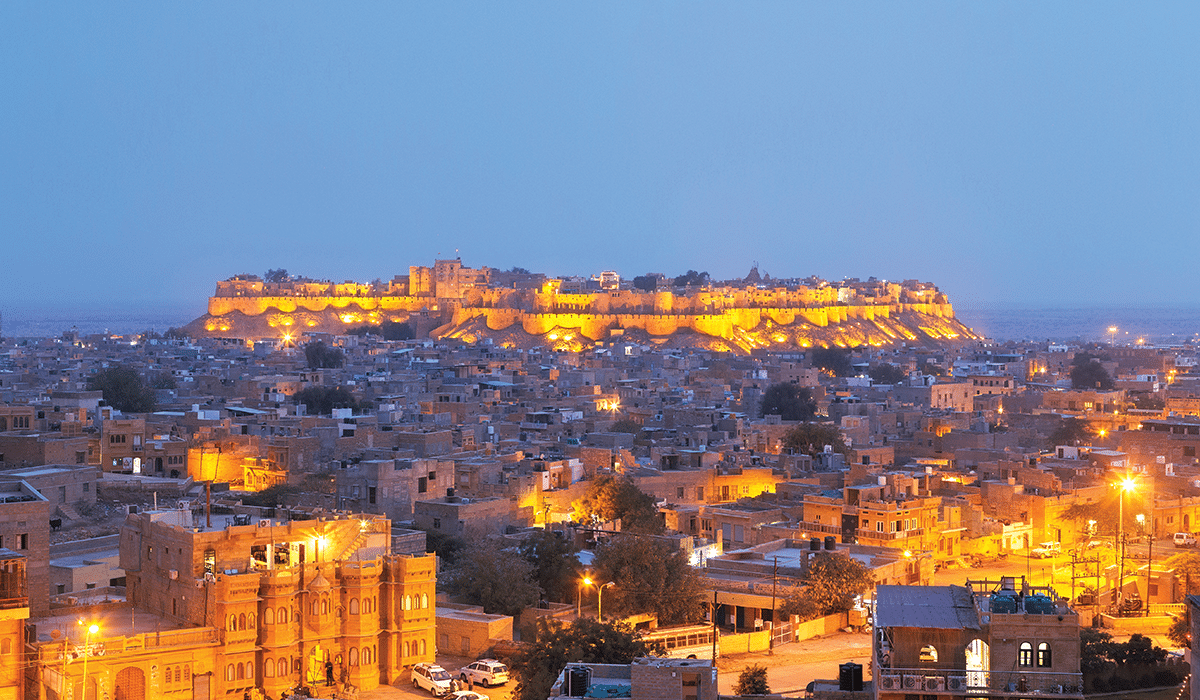
Defined by its medieval sandstone castle rising up in the heart of the Thar Desert, Jaisalmer is a far-flung frontier town that’s long been known as the ‘Golden City’. And while it was once a place of extreme wealth, the golden glint has nothing to do with precious metal and everything to do with the manner in which its yellow stone buildings absorb sunlight and — at sunset, especially — radiate a warm, golden-hued glow.
It really does glisten like something out of a fairytale, and you can witness this effect from out in the desert itself, from the rooftop of one of the havelis (mansions) at the foot of the fortress, or from within Jaisalmer Fort itself. The magic of this ancient structure, known as Sonar Killa or the Golden Fort, is that it is still inhabited today, making it the oldest living fortified city in Rajasthan, India’s so-called ‘Land of Princes’. About a thousand people dwell in what can feel like a congested, crowded, chaotic cobblestone maze lined with spice shops and trinket stalls, museums and tucked-away restaurants.
Situated 285 kilometres west of Jodhpur (aka ‘the Blue City’) on the far western border of India (55km from Pakistan), Jaisalmer was founded in 1156. Its walls rise some 9m from a roughly triangular base on Trikuta Hill and it’s buttressed by 99 bastions.
Its location — on a once crucial trade route — was strategic and enabled its Rajput leaders and the Jain merchants who set up shop here to collect enormous taxes from the silk-, opium- and spice-laden caravans that passed through the desert between the 14th and 16th centuries. It’s why there are so many beautifully carved havelis built of sandstone within the fortress and in the sprawling town that sits below its bastions, edging into the desert.
There’s plenty to see within the fortress itself, including the seven-storey Raj Mahal (or Maharajah’s Palace, now a museum), several Jain temples, always immaculately maintained, and the Shri Laxminath temple, dedicated to the Hindu goddess. The fortress has been the scene of many military sieges and it’s fascinating to ascend its battle-scarred ramparts and simply explore — do look out, though, for pickpockets, potholes, cows (who frequently block the way) and cow dung, often in big, wet, steaming piles.
It’s worth dodging these minor obstacles, of course — splendid views are to be had from the cannon ramparts that hang overhead. From up there, you get superb views of the city below and the enfolding desert plateau. You can also take a camel ride across the desert, perhaps with a picnic somewhere out in the middle of nowhere. On the ride back to town, that shimmering fortress is like a squat tower of molten gold.
Words: Keith Bain
Photography: Shutterstock
Also read: Expert safety tips for holiday travel