

The chair is arguably the best single representation of furniture design evolution – here’s why.
While trends in interiors rise and fall, chairs are often seen as the most mundane piece of furniture. They’re also interesting sites of opportunity for reinvention. The simple and universal chair tells the story of design more clearly than any other object. Its evolution maps shift in power, technology, domestic life, and our changing relationship with comfort. A quiet constant of our lives, it waits for us at the dining table, holds us through long conversations, caters towards community, supports us as we work, and receives us at the end of the day when the body finally asks to rest. More than any other piece of furniture, the chair captures how we live. To understand the chair is to also understand ourselves as people. Let’s take a look at this item through the ages.
1800s: Status and hierarchy
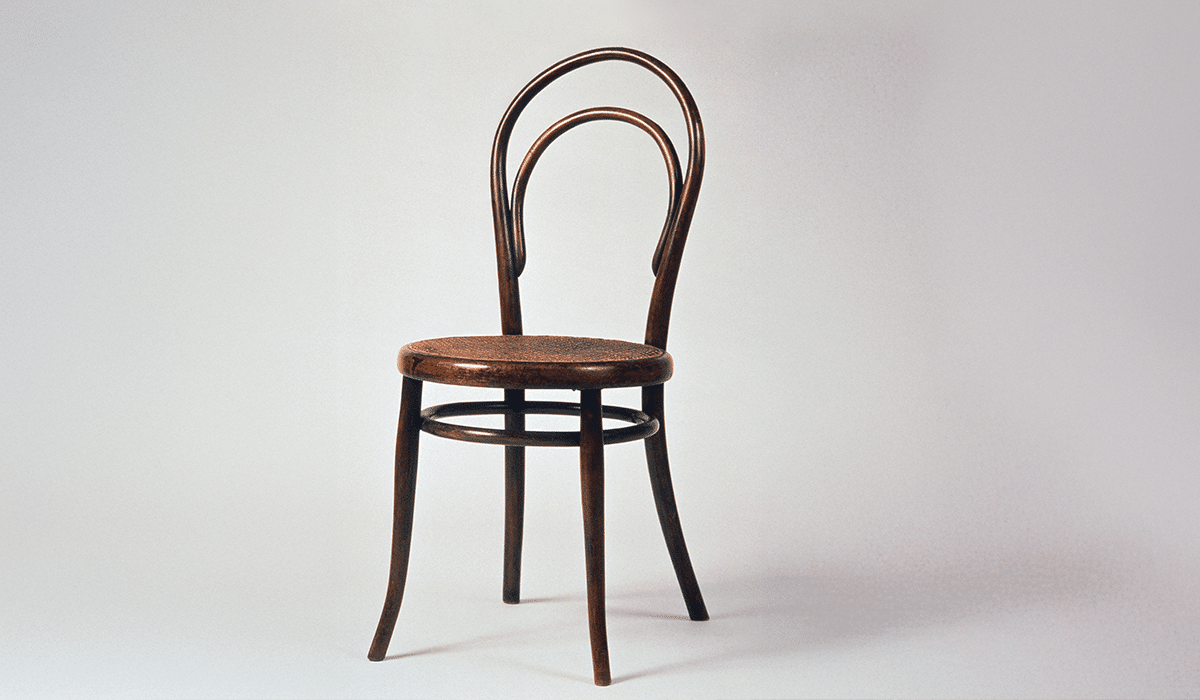
In the 19th century, chairs were markers of status. Heavy, carved wooden seating reinforced class distinctions and social order. Sitting upright was a moral and cultural expectation, particularly in public and formal domestic spaces. Then in 1859, Michael Thonet’s Chair No. 14 changed everything. Using steam-bent beechwood, it reduced the chair to six components that could be mass-produced and flat-packed with ease. Affordable and lightweight, it suited cafés, restaurants, and growing urban life. Culturally, this chair reflected a society moving towards industrialisation and shared public space, where sitting was no longer reserved for royals or the elite.
1920s: Modernism and a new way of living
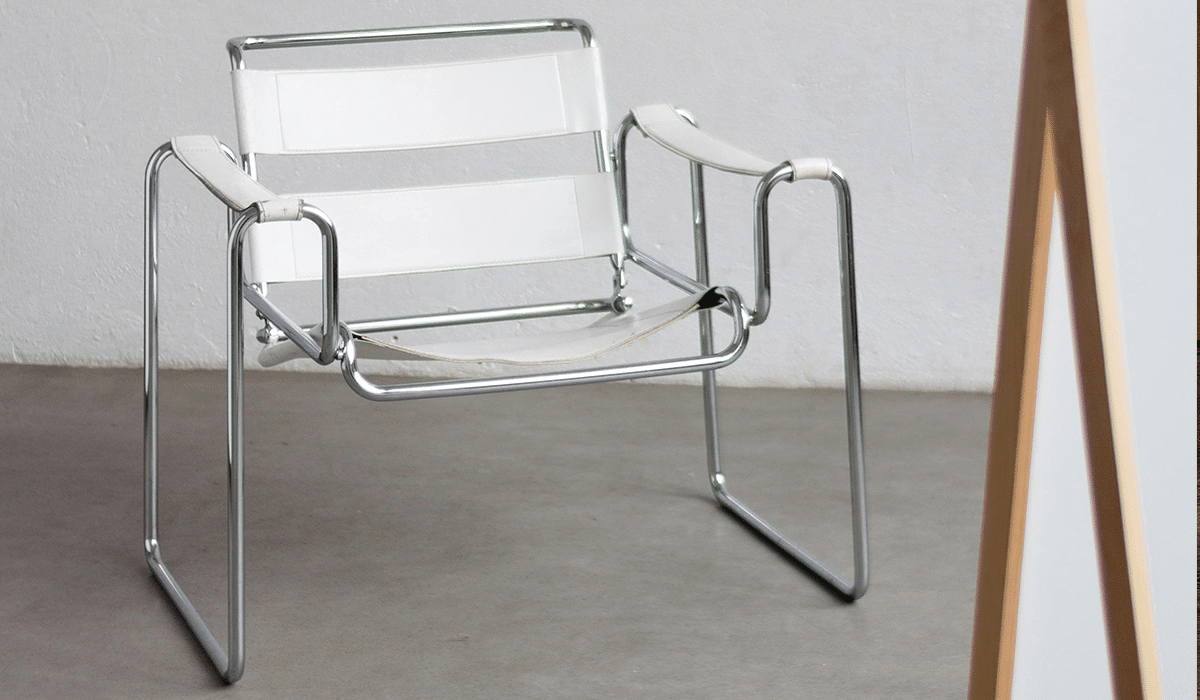
The inter-war years embraced technology and structure. Designers rejected ornament and tradition, favouring efficiency and rational design. Chairs became expressions of the machine age, embracing geometry and strong symmetry. The iconic Wassily Chair by Marcel Breuer (1925), made from tubular steel and thick leather or canvas, embodied this shift. Inspired by bicycle frames, it used strong industrial materials that were not associated with domestic furniture or reflective of Bauhaus design philosophies. Its functionality and linear openness suited modern apartments and progressive lifestyles, suited towards the optimism in industry as well as the belief that design could reshape society.
1950s & ’60s: A modern family home
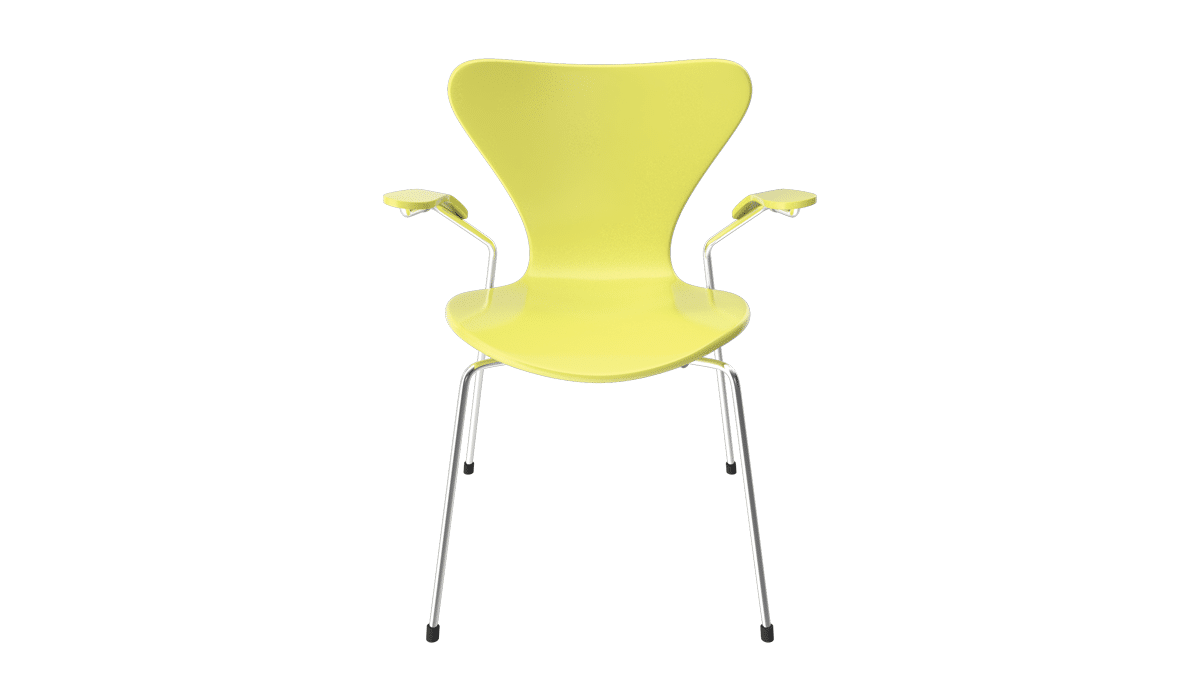
Post-war, society turned inward and homes became spaces that sought solace, introspection as well as family time. Design became more human-centred and emotionally engaging. The Eames Lounge Chair (1956), redefined luxury as comfort. A design we all know and love, its moulded plywood shell and leather upholstery embraced the body rather than correcting it. Around the same time, Arne Jacobsen’s 1955 Series 7 chair, offered a lightweight, stackable solution for modern living, perfectly suited to smaller homes and communal spaces. Together, these designs reflected a culture balancing new hopes, desired peace and stability.
1970s: No rules, but experimentation
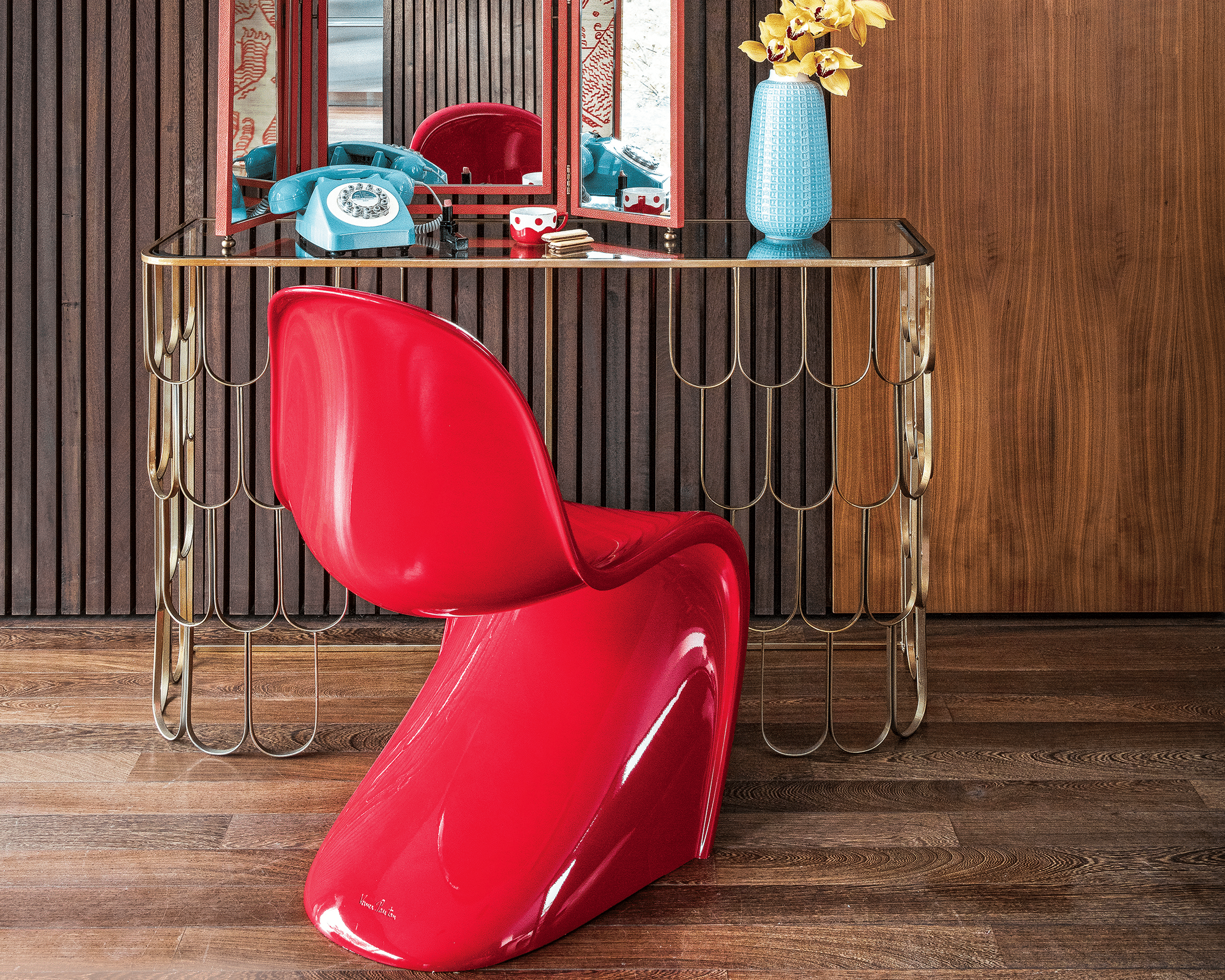
The 1970s rejected rigid social structures. Living became more casual, and interiors followed suit. Seating moved closer to the ground, encouraging relaxed postures and a sense of communal living. Michel Ducaroy’s Togo (1973) playfully represents this cultural shift, formed entirely out of a soft, unstructured foam. Earlier in 1967, Verner Panton’s Panton chair captured the era’s fascination with new materials as well as expressive form in a sculptural, single-piece plastic chair.
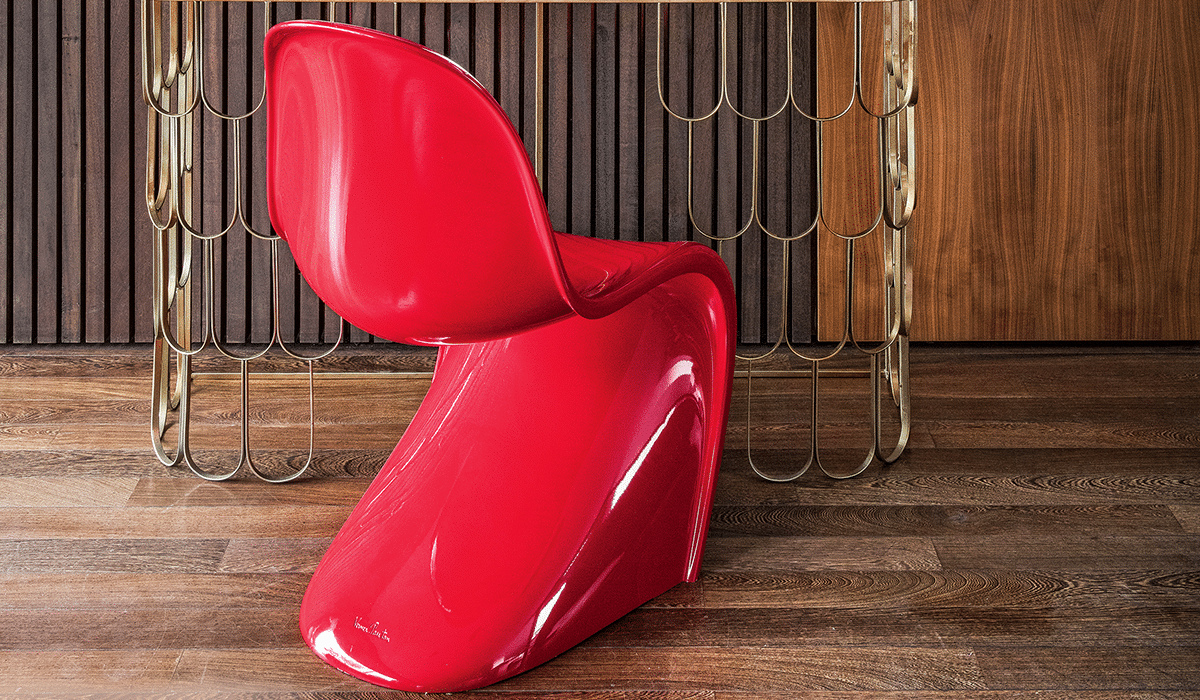
These designs suited a generation questioning tradition and embracing the extraordinary.
@alexandyuyu Episode 2 | Design You Need To Know: The Panton Chair 👽 Alex & YuYu are breaking down the “impossible” 1960s icon that took 10 years to perfect. Verner Panton wanted to kill the traditional chair legs and replace them with this Space Age cantilever curve. It took a legendary collaboration with Vitra to finally crack the code of the world’s first single-mold plastic chair. From broken prototypes to the Pop Art legend it is today, this is the history of a design that was decades ahead of its time 🪑✨ Follow for episode 3 Masterpiece of too edgy for your home? 👇 #designtok #designhistory #pantonchair #spaceage #designyouneedtoknow ♬ original sound – Alex & Yuyu
1980s: The chair as art
In the 1980s, furniture became a statement. Chairs were no longer a neutral piece of functional design, but rather grew to express personality, ideology and wealth embraced through colour, exaggeration and symbolism. The Carlton Chair by Sottsass (1981) challenged the idea that seating had to prioritise comfort. It functioned as a cultural artefact, reflecting postmodernism’s spirited rejection of traditional modernist restraint. Gaetano Pesce’s UP5 chair (1969), was made popular in the ’80s with its anthropomorphic form that turned seating into art.
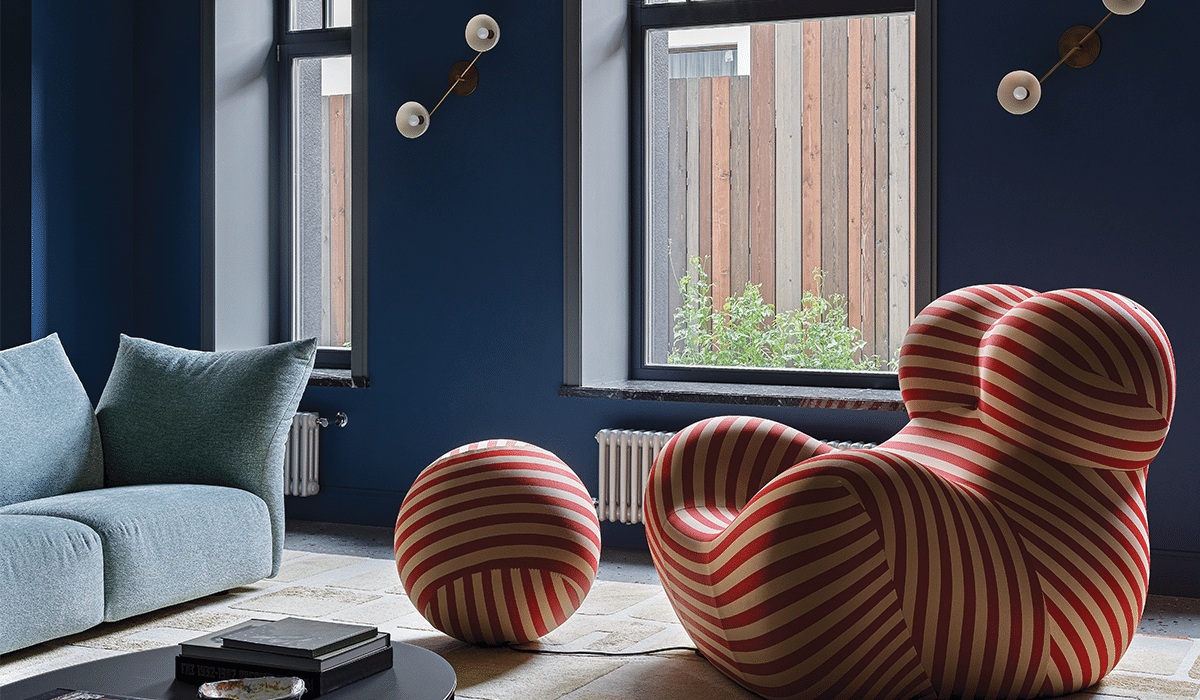
These designs mirrored a decade obsessed with visibility and self-expression made possible through design and technological innovation.
@admiddleeast It was 1968, and Gaetano Pesce was in the shower. “I had the sponge in my hand,” explains the Italian designer. “When I pressed the sponge, it shrank, and when I released it, it returned to its original volume.”An idea occurred: Couldn’t a chair behave the same way? Today, we take a look back at Pesce’s revolutionary feminist seat. For more iconic chairs – from ones that zig-zag to others on which you perch precariously – discover AD’s selection of 7 iconic dining chairs that just make sense. #upchair #gaetanopesce #designicons #feminism ♬ original sound – AD Middle East
‘90s & early 2000s: Minimalism and global living
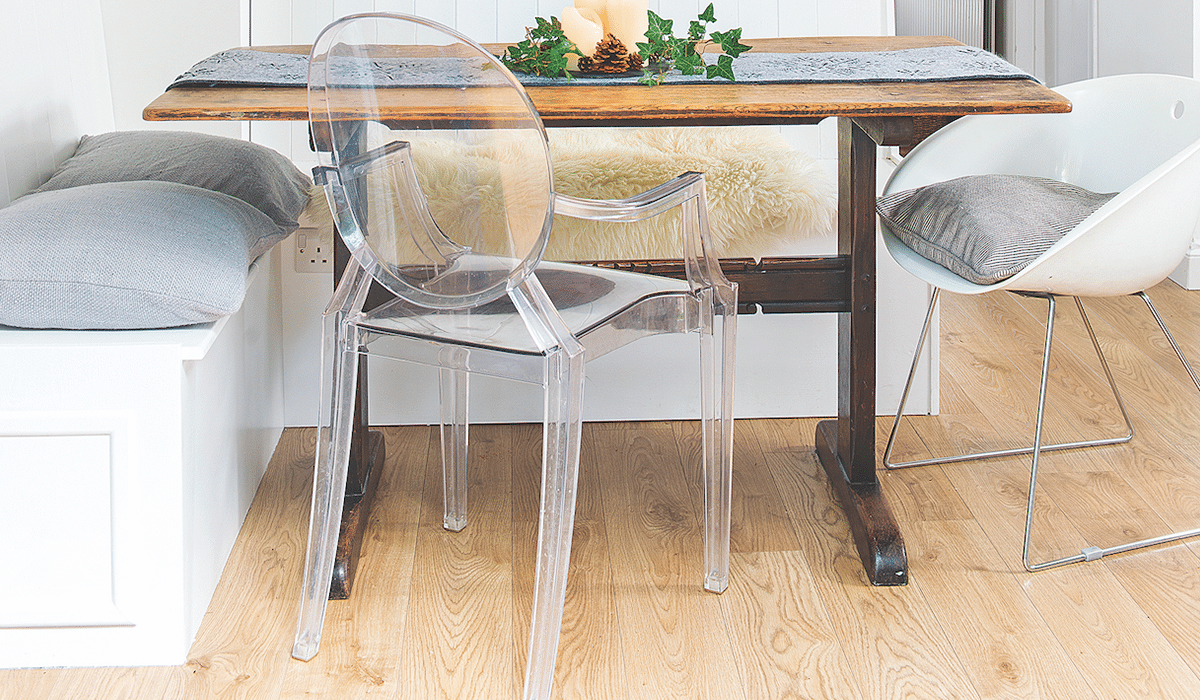
As lifestyles became more mobile and globally shared by means of a digital revolution, design grew quieter and more versatile. Homes required multifunctional and less formal design. A reimagined plastic chair, moulded out of a simple length of plastic tube, Jasper Morrison’s Air Chair (1999) offered simplicity, durability as well as adaptability made perfect for everyday use. In 2002, Philippe Starck’s Louis Ghost Chair similarly reinterpreted the chair’s historical form through transparent plastic, reflecting a new culture that valued irony, accessibility and mass appeal. As an emerging digital landscape monopolised mainstream culture, chairs resorted to functionality as flexible living tools rather than fixed design statements.
2010+: Soft modernism and craft
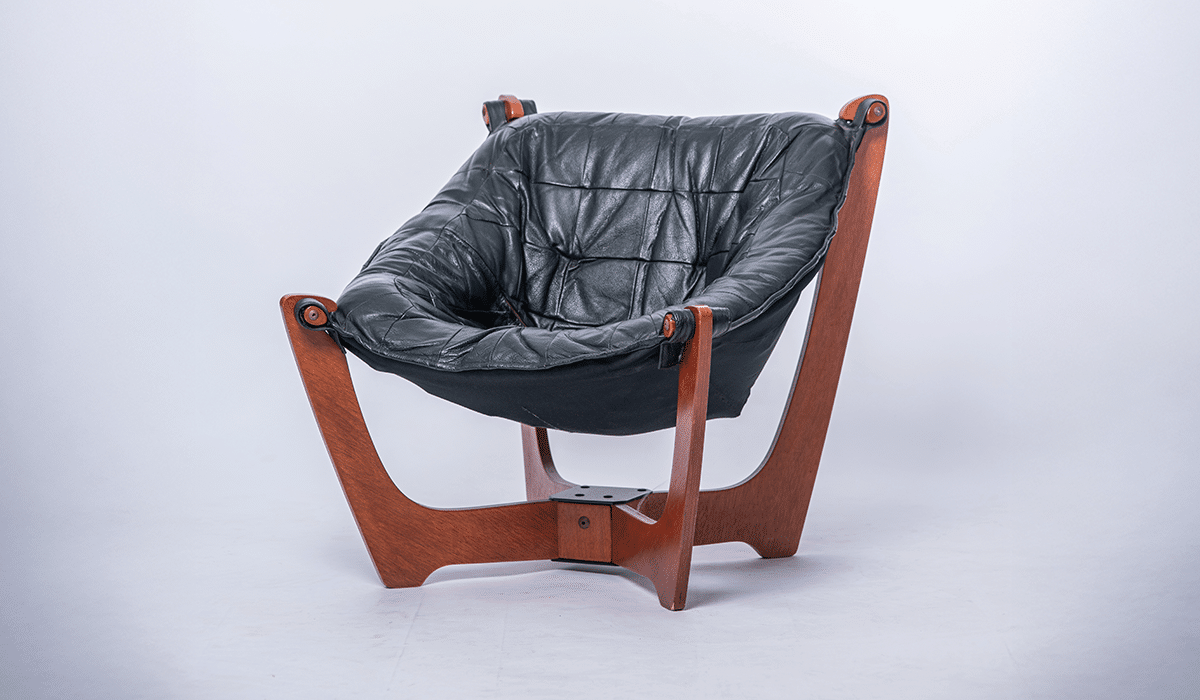
This era marked a shift away from stark minimalism toward warmth, tactility, and emotional connection. As digital life accelerated beyond belief, interiors became places of retreat as design began catering to personal refuge. Chairs grew softer, more enveloping and more expressive of craft. Patricia Urquiola’s Husk Chair (2011) exemplified this era’s desire for comfort without heaviness. Its quilted shell and modular cushions reflected a culture craving softness and adaptability. Jaime Hayon’s Ro Chair (2013), with its high back and cocoon-like form, responded to a need for privacy within open-plan homes. This decade’s seating mirrored a generation balancing online connectivity with a desire to slow down. Here, chairs became places to withdraw, not just to sit.
The Present: Hybrid living and concious comfort
The 2020s are defined by blurred boundaries, a time where history repeats itself and the future faces us head-on. Our living situations are reflective of this, as dining rooms double as offices, or living rooms host meetings, meals and rest. Chairs must work harder than ever. Jasper Morrison’s HAL Chair (2014), ahead of its time, has become a staple of this era, unassuming, minimal and ergonomic. Herman Miller’s Gaming Chair (2020), on the other hand, is representative of today’s chronically online society, made for long hours of sitting facing a screen. Chairs today are signs of the times, hopelessly in flux, as we find ourselves relishing in nostalgic designs and planning for the inevitable future.
Beyond: The future of sitting
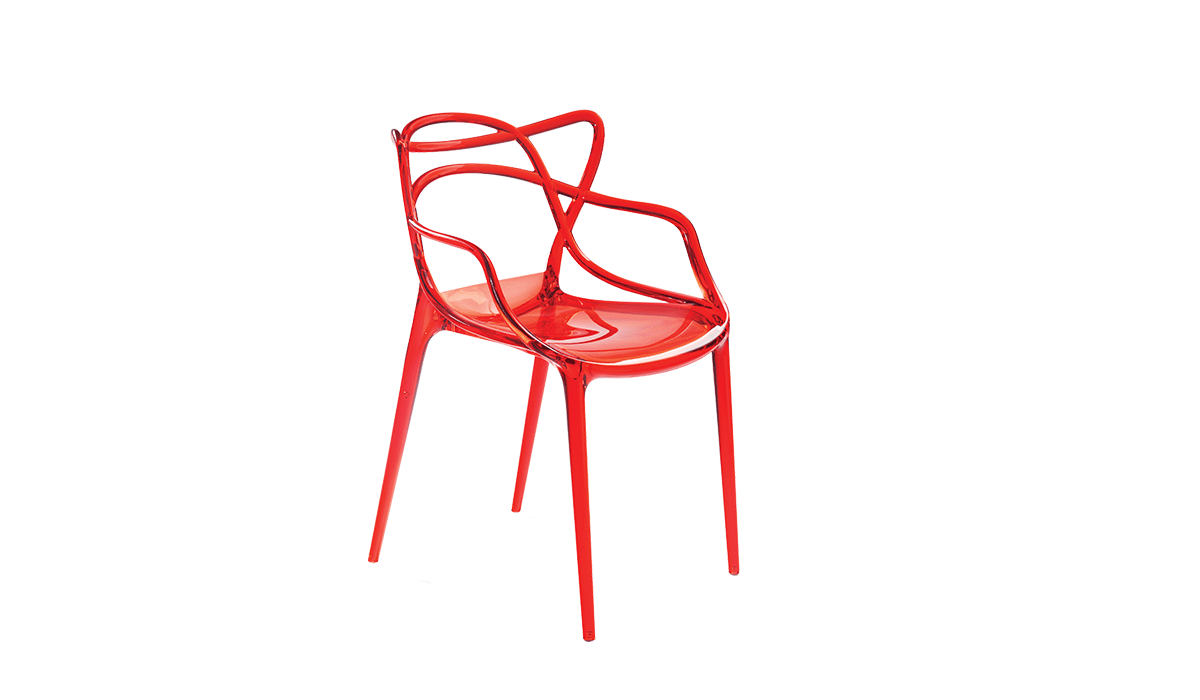
The future of the chair moves beyond static form. Designers are increasingly working with algorithms, biology and responsive materials to create seating that adapts to the body and environment. Luxury brand Kartell and designer Philippe Starck have embraced AI, generating a family of chair designs that use artificial intelligence to create minimalist, structural designs made out of recycled materials. Studios like FormaFantasma challenge the industry with recycled electronic waste seating concepts, speaking to a culture grappling with overconsumption. Studio Nucleo’s bio-grown design Terra (2000) has been reborn with their infamous laser cut cardboard frame that can be filled with soil and grass seed to become a fully grown lawn armchair. Looking forward, chairs may be grown rather than built and printed rather than assembled.
Words: Caludia Da Silva
Photography: Getty Images, Pexels, Freepik, Future Content Hub, Shutterstock
Also read: Elegant update revives Cape Town’s Victorian charm