
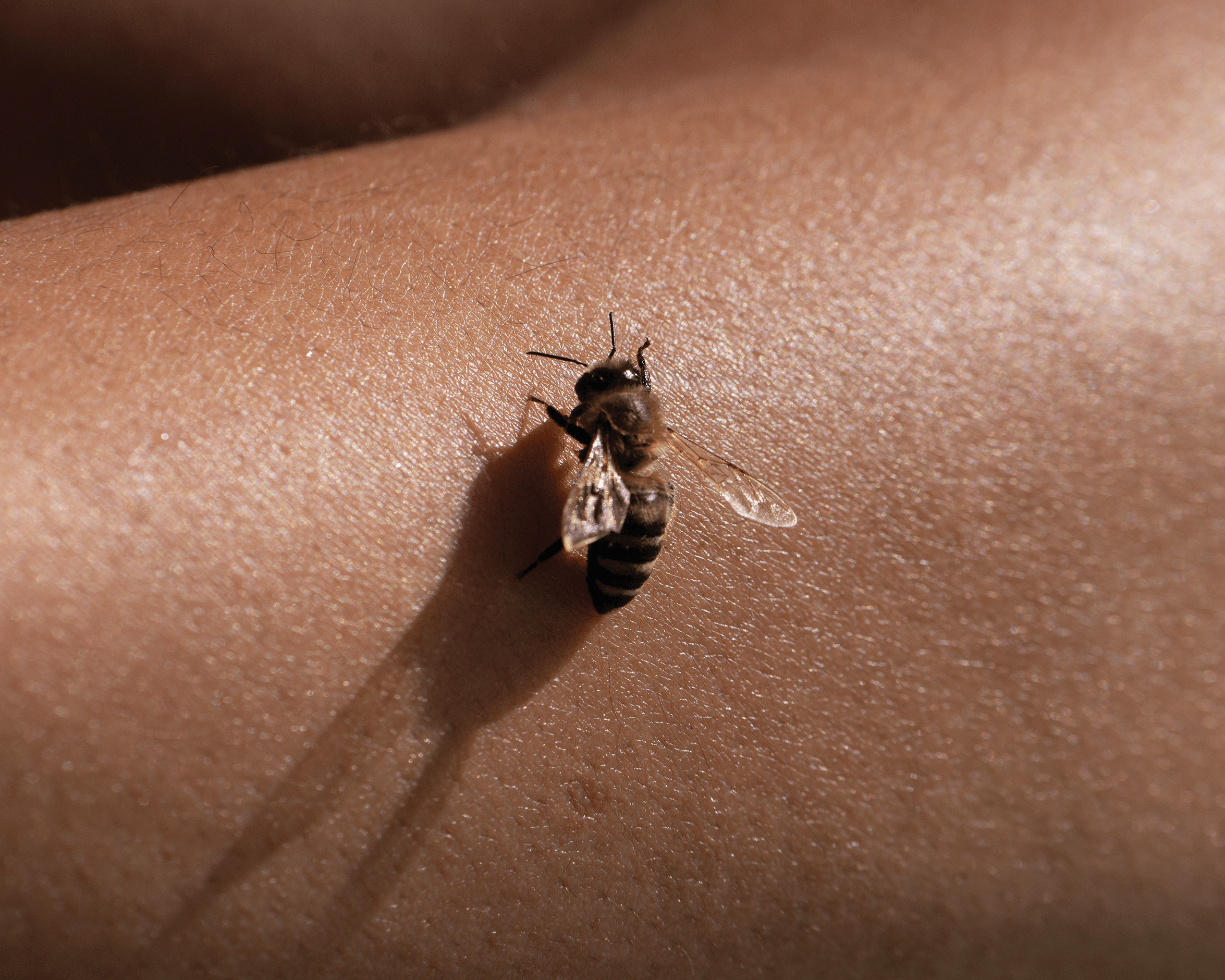
A bee sting can range from painful and itchy to life-threatening. It’s important to know what to do.
Everyone and everything has its place in the world. And for a thriving ecosystem, even the critters we might fear have a vital role to play. This includes bees, who have a harsh reputation for presenting a threat when you’re out enjoying the sunshine.
Though fuzzy and adorable, when a bee stings it can spoil the day – or result in far more serious consequences if a person has an allergy to bee stings. This is why it’s important to recognise the symptoms, know the right treatment and how to stay protected. We spoke to Dr Marinda McDonald of The Allergy Clinic in Randburg to find out more.
The big ouch
A bee sting results in a sharp burning pain, a red welt, a small white spot at the puncture site and slight swelling… Sounds terrible enough. They’re painful, but that pain and discomfort becomes heightened when there is an allergy to bee stings.
How do you become allergic? In a nutshell, your immune system identifies the proteins in bee venom as dangerous, triggering an over-reaction in your body. Instead of just the normal reaction to pain and swelling, your body then releases chemicals (known as histamines) that cause an uncomfortable and sometimes life-threatening reaction.
A bee sting allergy develops over time; the first sting is not likely to cause a reaction, but the body becomes more sensitised to the venom and future bee stings are likely to produce an adverse allergic reaction. If a person has a history of allergies (to various other substances), their tolerance for bee stings is likely to be diminished.
A bee sting allergy presents as extreme redness or swelling at the sting site. This may increase and even spread over the next day or two. In some cases, the sting can immediately result in anaphylaxis (closing of the airways, a drop in blood pressure and shock), which requires emergency treatment.
In the event of a bee sting
- Move carefully to an area away from the bees, to avoid any more stings.
- If the stinger is still present in the skin, scrape it off (this is where the venom sac is present). You can do this with the edge of your fingernail, a bank card, a blunt knife or similar object. Do not use tweezers, as these will squeeze more venom out of the sac.
- Clean the affected area with soap and water. Apply a cold pack or ice for 10–20 minutes to help reduce swelling.
- Treat the pain and itching with soothing creams (such as calamine lotion), painkillers and antihistamines. Do not scratch as this might lead to a skin infection.
In the case of an anaphylactic reaction, the treatment is adrenaline (epinephrine). The person should immediately go to the nearest emergency room. If anyone in your family has previously had an anaphylactic reaction, then it’s imperative that you have an EpiPen (containing epinephrine, available by prescription) in your home first-aid kit. “Make sure it has not expired, that you know how it works and when to administer it,” says Dr McDonald. “It is also important to have an anaphylaxis action plan. If you suspect your child has a bee allergy, confirm the severity with your doctor and discuss lifestyle factors.”
@texasbeeworksWhat to do if you get stung by a bee♬ original sound – Erika Thompson
Symptoms of a system reaction to bee stings (from mild to severe)
- Itching and sharp, burning pain
- Skin reactions, such as hives
- Nausea, vomiting or diarrhoea
- Swelling of throat and tongue
- Difficulty breathing, wheezing
- Dizziness or fainting
- Weak, rapid pulse
- Loss of consciousness
Save yourself and the bees
Dr McDonald explains that systemic reactions are more rare in children than “That said, bee stings are the most common cause of anaphylaxis in adults and second most common cause of anaphylaxis in children,” she says.
Bee sting allergies are unlikely to go away as we age, but the severity of the reaction might lessen. Most children will outgrow their allergy if they’ve had a mild reaction, but more severe reactions have a 30–40% chance of a future severe reaction.
How to avoid getting stung by a bee
- Bees are attracted to perfume and sweet drinks or foods (so keep these covered when outdoors). They are also drawn to brightly coloured or floral clothing.
- Don’t swat at a bee if it buzzes around you. It will feel threatened and more likely to sting.
- If a bee lands on you or your child, gently move it to a flower or place to feed. You can use paper or tissue for this. Panic can make the bee feel like it’s under attack, which may result in it stinging you to defend itself. If you stay calm, you show both the bee and your child that there is nothing to fear.
- Teach children to not stick their fingers into flowers; bees are attracted to the pollen.
- Wear covered shoes; avoid walking barefoot across flowering fields or lawns.
- Walk calmly away from any bees you see. If it’s a swarm, cover your nose and eyes and run for shelter inside a building or car.
- Call in a beekeeper to remove any unwanted beehives around your home.
Words by: Saadiqah Schroeder
Photos: Pexels, Shutterstock
Also read: Rachel Kolisi enters a new chapter